

Not all Mini LED TVs are created equal.
TCL Has True Mini LED
As the brand that introduced the world's first Mini LED TV, TCL knows a thing or two about it.
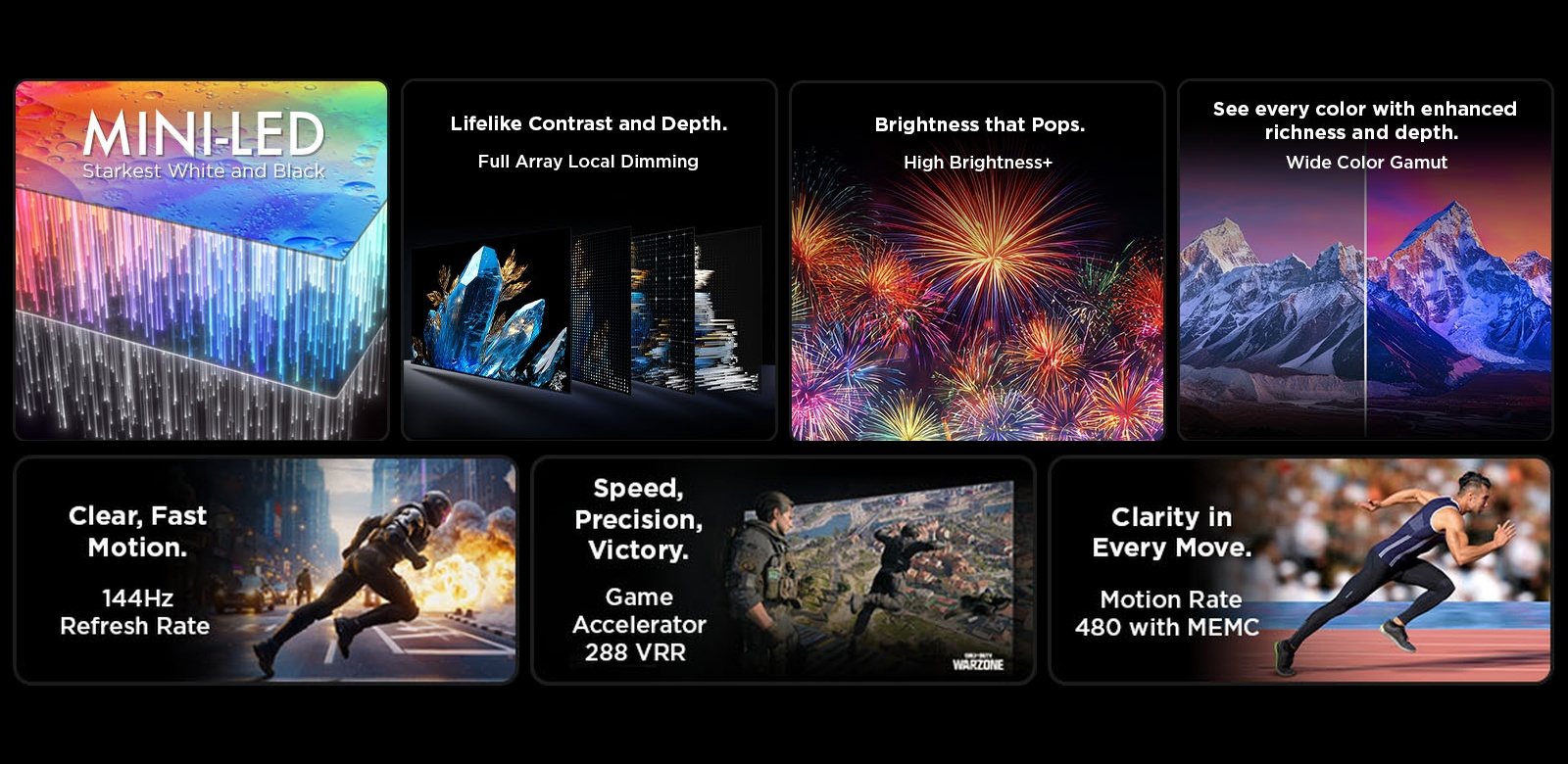
- Brilliant brightness
- Amazing contrast
- Incredible colour
What makes it True Mini LED
True Mini LED means Mini LED with full-array local dimming. Here's how it compares with the other common backlight designs.
The 3 key things in every Mini LED TV
TV reviewers and shoppers generally agree: a Mini LED TV should have all three.
- 01
Mini LEDs
Small LEDs, so you can pack lots of them into the backlight: the light that makes your picture.
- 02
Full array
The Mini LEDs are arranged in a full grid across the entire back of the TV, called full array.
- The big one03
Local dimming
All those Mini LEDs are broken up into zones that brighten and dim independently, called local dimming.
Without these 3 key things, Mini LED can't deliver the picture performance you expect.
Every scene comes alive with striking contrast and depth.
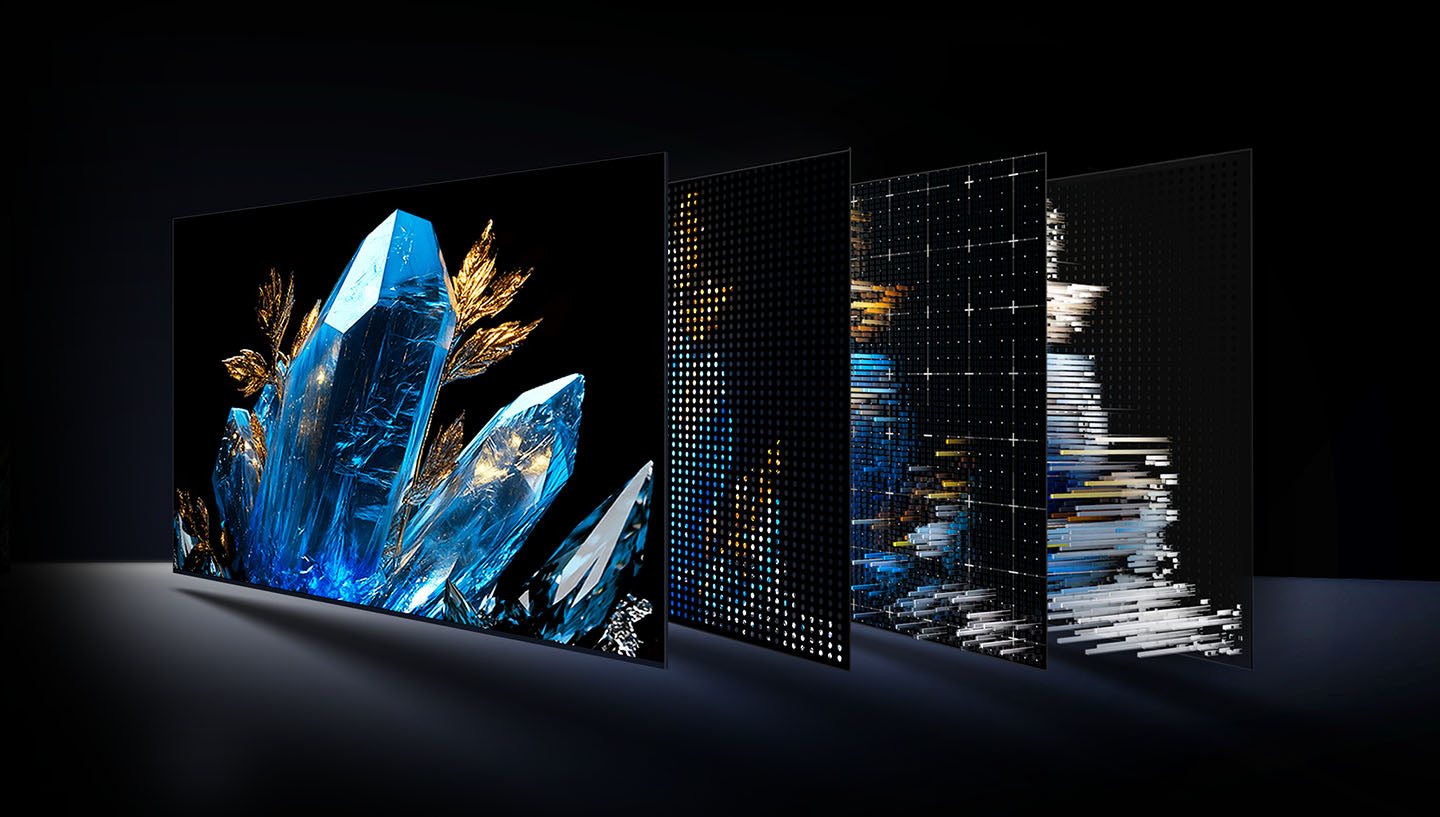
Small LEDs don't make deep blacks. Controlling them does.
"True Mini LED" describes the size of the lights behind a TV screen. The picture people buy Mini LED for comes from full-array local dimming: hundreds of zones that brighten and dim independently. Drag the line to compare.
Simulated illustration for explanation only. It is not a photo or recording of any TV, and results on real TVs vary with content and settings.
What's behind the screen
Every LCD TV, Mini LED included, shines a backlight through the picture. Blacks only look black when the light behind them is turned down. How the lights are arranged, and whether they can be controlled, decides how well a TV can do that.
Switch to the night scene to see which lights each design can turn down.
Edge-lit
LEDs sit only along the edges. A light guide spreads their light toward the middle of the screen.
The edge lights stay on to light the moon, and that light spreads across the whole sky. Blacks look grey.
Direct-lit, no local dimming
Two strips of LEDs run across the back of the screen, switched together as one. There is no control from area to area.
Both strips stay on to keep the moon bright, so the whole sky glows grey behind the picture.
Full-array local dimming
LEDs cover the entire back of the screen in a grid of zones, and each zone brightens or dims on its own.
Only the zones behind the moon stay lit. The rest switch off, so the sky stays truly black.
Simplified illustrations of three common backlight designs. Not drawings of any specific model.
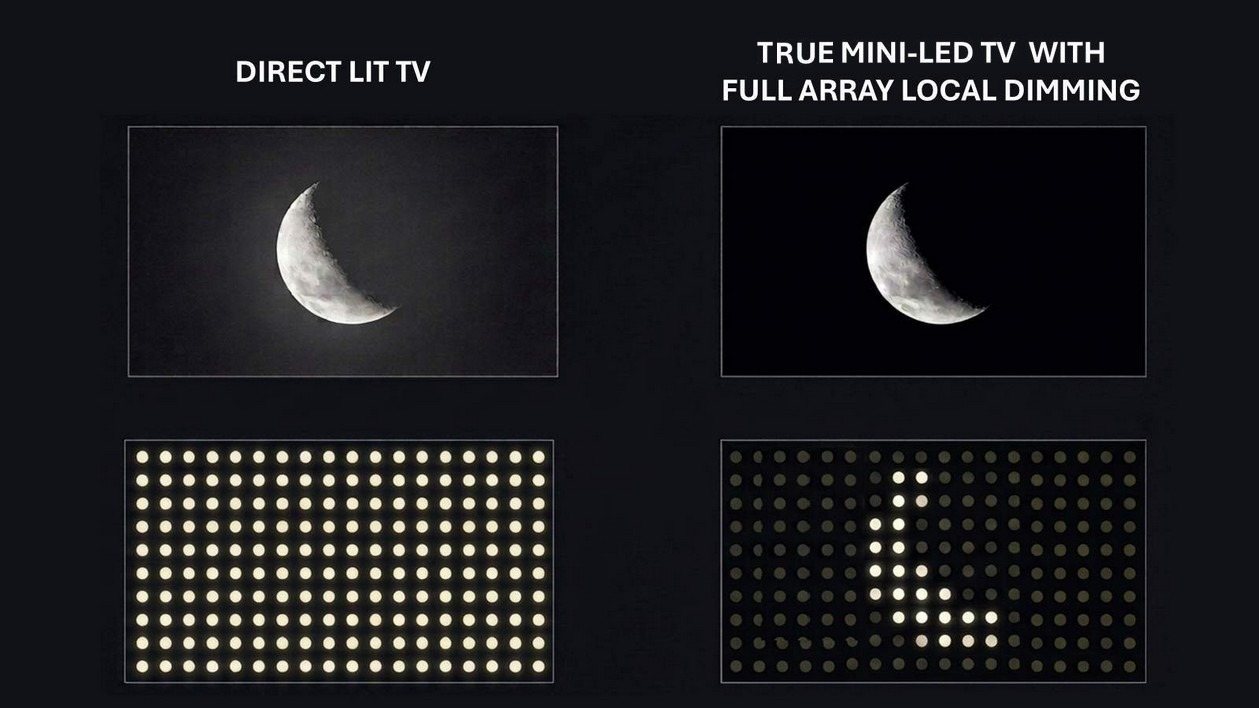
Direct-lit TV vs. Mini LED TV with full-array local dimming. Simulated images.
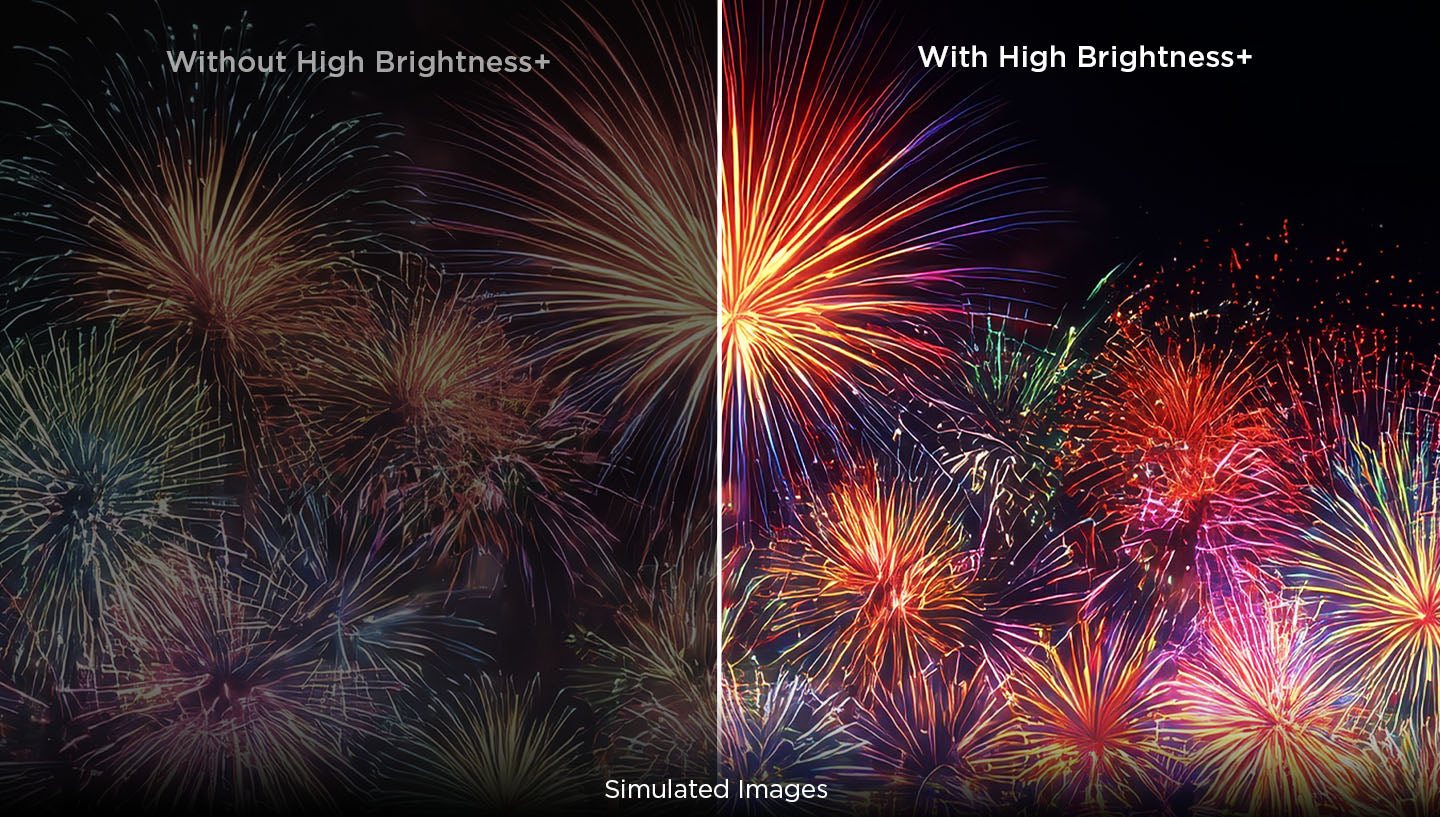
Why controlling the light matters
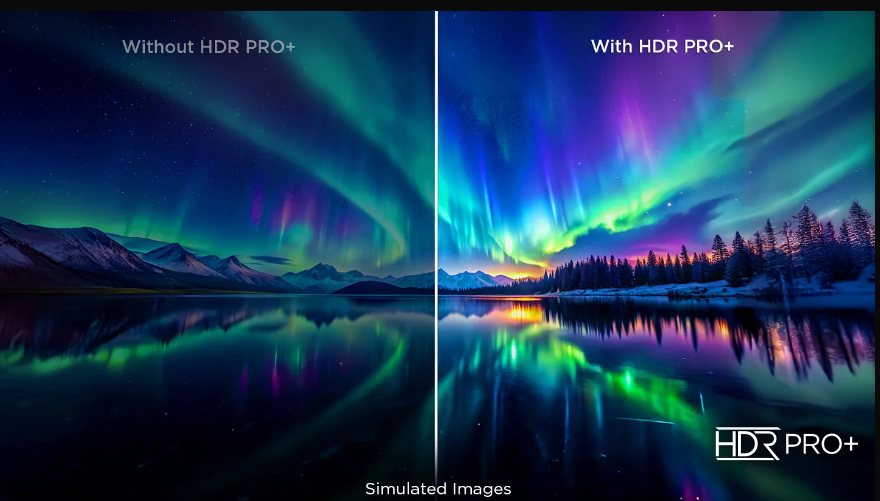
More convincing HDR
Bright and dark parts of the same frame can sit side by side, which is what HDR movies and shows are made for.

Dolby Vision
Scene-by-scene HDR that adjusts brightness and colour to each moment, so your favourite shows and movies look their best.
Smooth motion
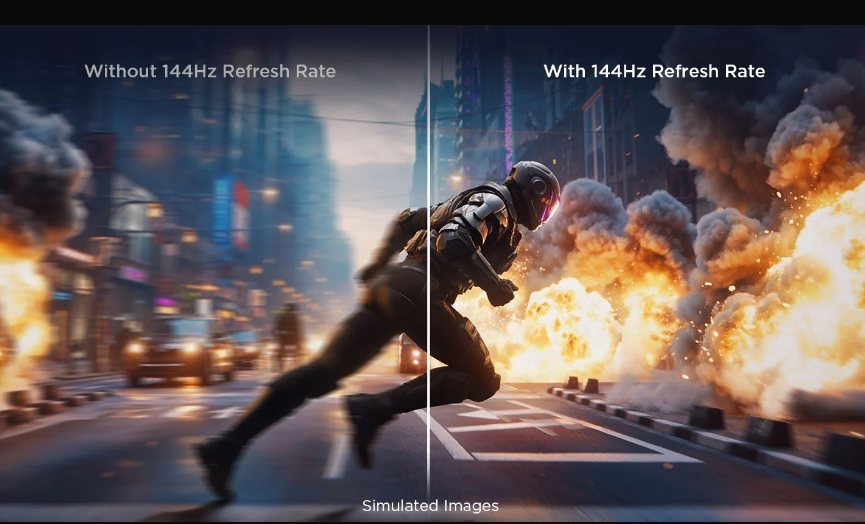
On the M8L and M8L PRO Series, a native 144Hz panel and Game Accelerator 288 VRR (55" and up) keep sports and games smooth and responsive.
Not every "Mini LED" TV delivers
Some TVs sold as "Mini LED" don't deliver on the promise of Mini LED. What kind of TV is it if it:
- Doesn't have really small LEDs?
- Doesn't have lots of them in a full array?
- Doesn't have local dimming?
You basically have a regular TV.
Check these before you buy
The words "True Mini LED" on the box won't tell you how the backlight is controlled. The spec sheet will.
Look for "full-array local dimming"
It should be listed by name. A published zone count is a good sign the dimming happens in hardware.
Read the footnotes
Phrases like "software-based" or "not full-array" tell you the TV doesn't dim in independent hardware zones.
Check the native refresh rate
A native 120Hz or 144Hz panel shows smoother motion in sports and games than a 60Hz panel.
Check the HDR formats
Dolby Vision and HDR10+ adjust brightness scene by scene. Look for both so every streaming service looks its best.
Frequently Asked Questions
What is True Mini LED?
Not all Mini LED TVs are created equal. TCL’s True Mini LED features thousands of tiny LEDs across the entire backlight, powered by full-array local dimming for precise brightness control, deeper blacks, and greater contrast.
Does every Mini LED TV have local dimming?
No. Some Mini LED TVs use software-based dimming or switch their backlight as one. Check the spec sheet or product page for “full-array local dimming” by name.
Isn’t software dimming the same thing?
No. Full-array local dimming turns down the actual lights behind dark areas. Without it, the backlight can’t go dark in one spot while staying bright next to it, so blacks look greyer.
How can I see the difference in a store?
Ask to play a dark scene with a bright object, like a night sky, a space scene or subtitles on black. Look at the black bars and the area around the bright object.
Which TCL True Mini LED TV is right for me?
Choose the M8L if you game or watch a lot of sports: it has a native 144Hz panel, Game Accelerator 288 VRR on 55" and up, and four HDMI ports. Choose the M7LF for full-array local dimming in the widest range of sizes, from 50" to 85".
Don't settle for Mini LED in name only.
You deserve True Mini LED. You deserve a TCL.